On a bridge project, fabrication and installation are only part of the delivery process. The work also depends on records that can be reviewed, submitted and traced; safety information that reaches the workforce; figures that can be reconciled; and questions that are routed to the right party without delay. The source article about the Tianjin Haiqing Road project provides a useful view of these less visible controls through the responsibilities handled by project staff member Zhu Huihui.
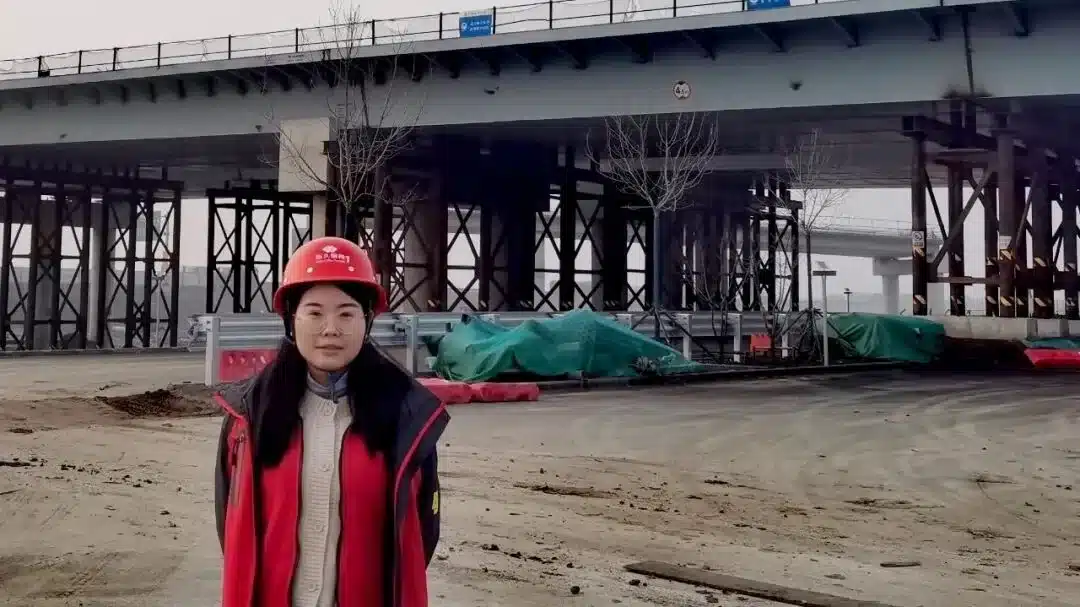
The source identifies Zhu as a documentation specialist with Zhonghengfeng Group’s bridge company who moved to the project site in September 2020. Her assignment combined document preparation and submission with communication and day-to-day support for site management. Rather than presenting this as an individual award story, the more relevant business lesson is how these activities help connect the office, the work front, the client’s departments and the construction team.
Document Preparation and Submission
Project documentation turns physical progress into evidence that other parties can inspect and act upon. According to the source, Zhu’s core work included writing and organizing project materials and sending engineering documents for review. Those tasks require consistent file naming, version control, clear ownership and timely follow-up. A drawing, checklist or submission that cannot be located at the point of need can slow a review even when site work itself is progressing.
A practical document workflow normally begins by identifying what must be produced, who prepares it, who checks it and where the approved version is stored. The source does not describe a formal digital system, so no such system should be inferred. It does, however, show that document submission was an active project function rather than an administrative afterthought.
| Workstream | Source-described activity | Delivery value |
|---|---|---|
| Engineering records | Writing, organizing and submitting project documents for review | Supports traceability and review readiness |
| Client coordination | Communication with relevant client departments | Clarifies requirements and routes responses |
| Site support | Assistance with safety education and workforce administration | Connects records with field controls |
| Commercial records | Statistics, account reconciliation and payment follow-up | Improves alignment between reported work and commercial follow-up |
Safety Education as a Documented Routine
The source lists safety education among the project responsibilities. For engineering and procurement teams, the important point is not a broad claim about safety performance; the article provides no basis for an accident-free conclusion. The value lies in making instruction a repeatable, documented activity. Attendance, the subject covered, the responsible person and any required acknowledgement should be captured in a form that can be checked later.
The same principle applies when new workers arrive, work fronts change or a method is revised. Information must be communicated before it can influence behavior. Keeping the associated records also helps project managers establish what was explained, when it was explained and who received it. This is particularly relevant on bridge work, where access conditions and concurrent activities may change as sections are installed.
Statistics and Account Reconciliation
Zhu’s source-described duties also included statistics and reconciliation. These tasks matter because project participants may record quantities, labor or progress from different operational perspectives. Periodic comparison can identify missing documents, timing differences or items that need confirmation before they become larger commercial disputes.
- Use a defined reporting cut-off so each party compares the same period.
- Link quantities to the supporting record rather than relying on an isolated total.
- Record open differences, the responsible reviewer and the next action.
- Keep approved and working versions distinct to avoid accidental reuse.
- Coordinate payment follow-up with verified records and the applicable contractual process.
The source mentions payment follow-up but does not disclose contract terms, values or payment outcomes. Accordingly, the lesson is one of record discipline, not a claim about financial results.
Communication Across the Project Interface
The article states that Zhu communicated with client departments, worked alongside the construction team and assisted with site management. This interface role can reduce information loss when a question moves from the field to the party authorized to answer it. Effective communication should identify the issue, its location, the relevant document and the decision needed. After a response, the team should record the disposition and update affected files.
This approach is useful for technical queries, submission comments, workforce documentation and reconciliation questions alike. It also gives procurement teams better visibility. When material status, installation sequence and document readiness are discussed through the same controlled channels, purchasing and dispatch decisions can be based on current needs rather than assumptions.
Engineering and Procurement Takeaways
The Tianjin Haiqing Road example suggests five practical controls for similar bridge packages: establish a submission register; assign one owner to every open comment; connect safety education to workforce records; reconcile statistics at agreed intervals; and close communication loops in writing. None requires inflated claims. Their value comes from consistent execution and from making project information available to the people who must review, supply, install or approve the work.
The source does not provide the project’s full formal name or define Zhonghengfeng’s complete contractual boundary. This article therefore stays with the documented responsibilities and does not attribute the overall project to one participant. Organizations seeking support for steel bridge fabrication, project documentation interfaces or delivery coordination can discuss their requirements through our contact page.