
A company workshop profile published on January 22, 2021 names Cui Jishuai and presents workshop skill and fabrication craft as its central theme. This English revision retains those limited facts while replacing the original heroic phrasing with a process-centered question: how does practical skill become repeatable, reviewable value for a steel-fabrication customer?
The answer is not found in a personal label. It is found in the connection between released information, preparation, execution, inspection, and the record left behind. Skilled workshop work is important, but a customer also needs confidence that the method can be communicated across shifts, components, and project stages.
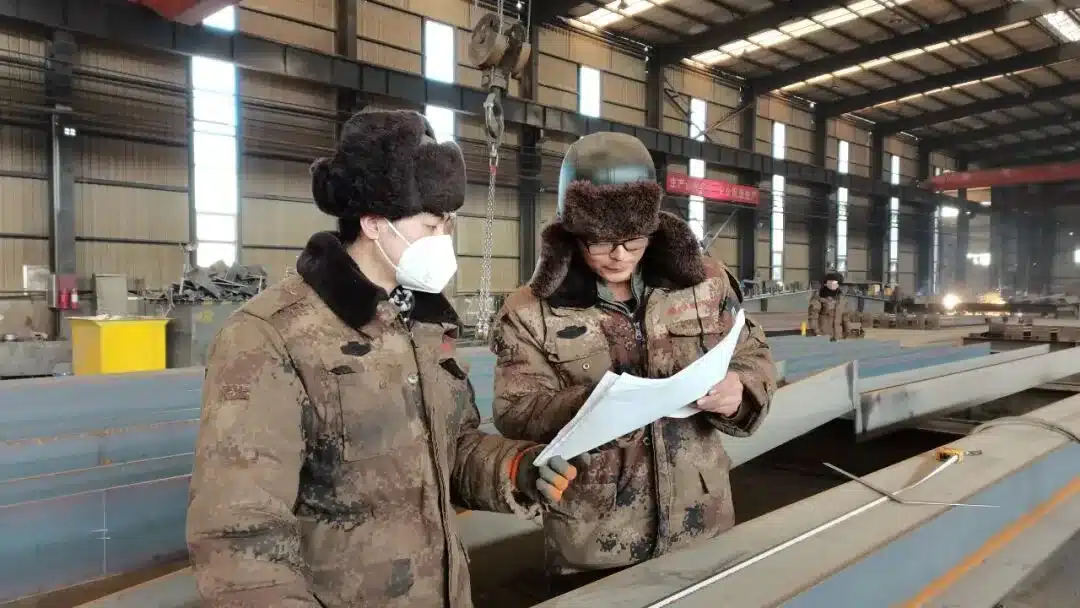
Skill Starts with Reading the Requirement
Workshop execution begins before a tool is used. The operator or team must work from the applicable drawing, work instruction, material identification, and process requirement. Dimensions, joint details, orientation, tolerances, inspection points, and revision status need to be understood in relation to the assigned operation.
That discipline gives engineering teams a clearer route from design intent to fabricated output. It also reduces dependence on memory or informal explanation. When a question arises, the workshop should be able to identify the governing information and route the question to the responsible function rather than improvise a technical change.
Process Records Connect Work to Evidence
| Workshop activity | Record purpose | Customer relevance |
|---|---|---|
| Job release | Identify the current drawing and work scope | Supports revision control |
| Material check | Link the input to the assigned component | Supports traceability |
| Set-up | Confirm fixtures, orientation, and reference points | Reduces repeat errors |
| In-process check | Capture required dimensions or visual conditions | Shows control before final inspection |
| Handover | Record completion and the next operation | Clarifies status and responsibility |
| Nonconformity response | Keep a deviation separate from accepted work | Supports formal disposition |
This framework explains the procurement value of documentation without attributing any unverified document set to Cui Jishuai personally. The source record identifies him and the workshop-skills theme; it does not provide a basis here for adding licenses, certificates, rankings, or specific technical authorizations.
Turning Experience into a Repeatable Method
Experience is most useful to a manufacturing organization when it can improve the next task. A practical workshop review can capture where fit-up was difficult, which sequence reduced unnecessary handling, where a reference dimension prevented cumulative error, or which check should occur earlier. The review should separate approved process improvements from changes that require engineering authorization.
Short, precise records are often more useful than broad praise. A marked drawing reference, inspection entry, issue note, or shift handover can make the status of work visible. Photographs may supplement a record when permitted, but they should be dated, identified, and linked to the correct component rather than presented without context.
Coordination Across Workshop Functions
Steel fabrication is rarely a single-operation activity. Preparation, cutting, assembly, welding, correction, surface treatment, inspection, packing, and dispatch can involve different teams. The quality of each handoff affects the next stage.
- Released information should be accessible at the point of work.
- Material and component marks should remain legible through the route.
- Inspection status should be clear before the next operation begins.
- Rework or deviation should follow an authorized disposition.
- Shift handovers should identify incomplete work and open questions.
These practices do not replace workshop judgment. They give that judgment boundaries and a record, making it easier for supervisors, inspectors, and engineers to coordinate.
What Buyers Can Ask During a Technical Review
Procurement teams assessing a fabricator can ask how the workshop receives revisions, how material is identified, which checks are performed during fabrication, and how records are linked to finished components. Where a project has specified hold or witness points, the parties should agree on notification and release responsibilities before production.
It is also useful to ask how workshop observations reach engineering and planning. A mature feedback route can identify recurring access, handling, tolerance, or sequence issues without allowing unauthorized design changes. The result is a clearer interface between practical fabrication knowledge and technical governance.
Records Should Be Proportionate to the Work
Documentation should match the component, risk, contract, and inspection plan. Not every workshop step requires the same formal record, but required checks should be defined before work begins. This keeps evidence useful and prevents teams from creating paperwork that cannot be connected to a technical or contractual purpose.
A Process-Based View of Workshop Capability
The 2021 source profile offers a human starting point through Cui Jishuai, but customer value is better described through controlled work than through individual hero language. Practical skill, current instructions, visible inspection status, and concise records together support consistency. No qualification is inferred in this article beyond the source’s identification of a workshop-skills theme.
If your project team would like to discuss fabrication requirements, drawing release, inspection documentation, or component traceability, please contact us. Early alignment can help define the records and review points that matter for your package.