A 22-Day Management Training Record for Front-Line and Middle Managers
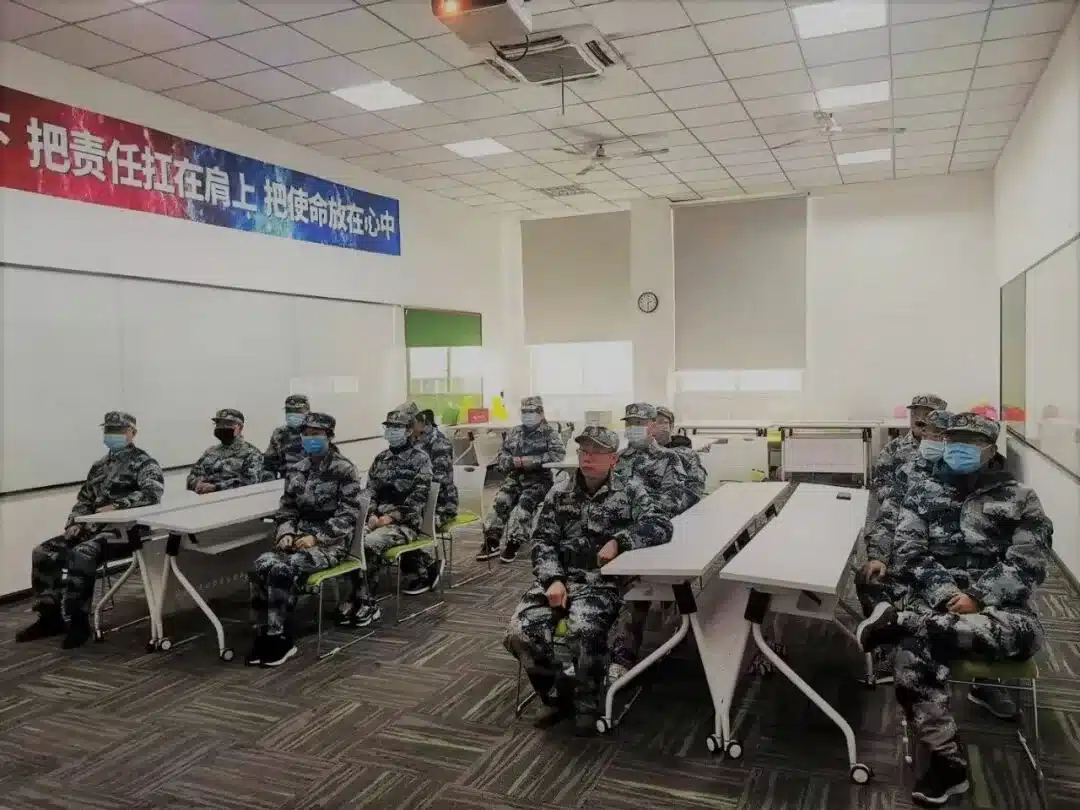
In early 2021, Shen Jixin, a director at Zhonghengfeng Group’s No. 1 steel-structure manufacturing plant, participated in a 22-day external training program focused on front-line and middle management. The original Chinese article called the event an “elite training camp” and celebrated the team’s first-place assessment result. This English version records it more plainly as management training and places the emphasis on collective learning, management methods, and workplace application.
The source says the program sought to improve professional standards, management capability, and broader competencies among middle managers. Participants learned and communicated as a group, developed familiarity and trust, completed team assignments, observed training discipline, and contributed to the learning environment. The team led by Shen placed first in the final assessment. This was a training result, not proof of production output, project quality, safety performance, or individual managerial superiority.
Training Facts Reported in the Source
| Item | Recorded information |
|---|---|
| Participant named | Shen Jixin |
| Role identified | Director at the No. 1 steel-structure manufacturing plant |
| Duration | 22 days |
| Audience/focus | Front-line and middle-management development |
| Learning format described | Study, exchange, team discipline, team assignments, and group interaction |
| Assessment outcome | The participating team ranked first in the final training assessment |
| Planned follow-through | Apply the learned theory in practical work |
The original article does not publish the complete syllabus, names of all participants, scoring method, assessor credentials, or subsequent operational data. Those limits matter. The event can be reported accurately as a development activity and assessment outcome without turning it into a broad claim about business performance.
Why Middle-Management Training Matters in Manufacturing
Front-line and middle managers connect plans made at company or project level with daily work in a workshop. They receive schedule and quality requirements, organize teams, coordinate equipment and materials, communicate changes, and report constraints. They also connect functions that may work to different priorities: engineering seeks clarity, procurement seeks timely decisions, production seeks stable inputs, quality personnel seek conformity evidence, and logistics seeks release certainty.
Training can help managers structure these interactions. Its value is not established by motivational language, however. It becomes useful when participants translate general methods into observable routines such as shift briefings, task allocation, constraint logs, production handovers, technical-query escalation, and review of quality records.
Collective Learning Rather Than an Individual-Hero Narrative
The source credits Shen with leading the team, while also describing 22 days of shared study and exchange. A balanced account recognizes both points. Leadership can create conditions for coordination, but learning outcomes depend on participation, clear assignments, feedback, and mutual accountability across the group.
This collective framing is especially relevant in steel fabrication. A component moves through several hands and processes: drawing review, material receipt, marking, cutting, forming or assembly, welding, inspection, coating, packing, and dispatch as applicable. No single individual controls the full result. Managers add value by making interfaces visible and ensuring that information and responsibility transfer correctly between stages.
Possible Workplace Applications
The source records Shen’s intention to use the theory in actual work and to encourage employee potential. It does not specify which methods were implemented afterward. The following applications are therefore practical examples for an engineering-manufacturing context, not claims about completed actions at the plant:
- Daily work planning: connect production tasks to approved drawings, material availability, equipment, inspection points, and shipment priorities.
- Visual constraint management: identify missing information, shortages, rework, maintenance needs, and downstream dependencies.
- Structured handovers: state what is complete, what remains open, and what evidence accompanies the work.
- Cross-functional escalation: send technical, commercial, or quality decisions to the responsible owner before they delay production.
- Team feedback: review deviations and lessons without relying on personal blame or unverified claims of exceptional performance.
From Training Attendance to Management Evidence
For clients and procurement professionals, attendance certificates and competition rankings provide limited assurance. More useful evidence is found in the systems that managers operate after training. During supplier evaluation, buyers may ask how production instructions are issued, how revisions are controlled, how deviations are recorded, how inspectors interact with workshop leaders, and how delivery risks are communicated.
| Management topic | Evidence a buyer may review |
|---|---|
| Task control | Production plan, dispatch list, work instructions, and responsibility assignments |
| Information control | Drawing register, revision status, technical-query log, and transmittals |
| Quality coordination | Inspection and test plan, hold-point releases, nonconformance records, and traceability documents |
| Constraint management | Material-shortage list, equipment status, action log, and escalation route |
| Handover | Release notes, packing lists, inspection dossier, and outstanding-item record |
The appropriate evidence depends on contract scope and project phase. A training event may support capability development, but it cannot replace project-specific records.
Engineering and Procurement Value
A manager who can coordinate information, people, equipment, inspection, and delivery interfaces can support more predictable execution. Procurement teams should nevertheless distinguish between intention and verified control. They can ask suppliers to demonstrate current procedures, sample records, role definitions, and escalation methods, and then align those controls with the proposed package.
For engineering teams, the lesson is similar: issue information in a form that front-line managers can act on. Identify governing documents, revision status, acceptance criteria, and decision deadlines. Where a design remains under development, separate released work from provisional information so the workshop is not asked to resolve design ambiguity informally.
Continuing the Management Conversation
The 2021 record shows an investment of 22 days in management development and a team assessment result. Its practical significance lies in the stated intention to bring learning back into the workplace, not in slogans or an individual-hero story. Sustainable improvement depends on team routines and evidence that can be reviewed over time.
If you are evaluating a steelwork manufacturing or project-delivery package, share the required scope, management interfaces, documentation expectations, inspection points, and schedule through our contact page. The discussion can then focus on the controls and records relevant to your project.