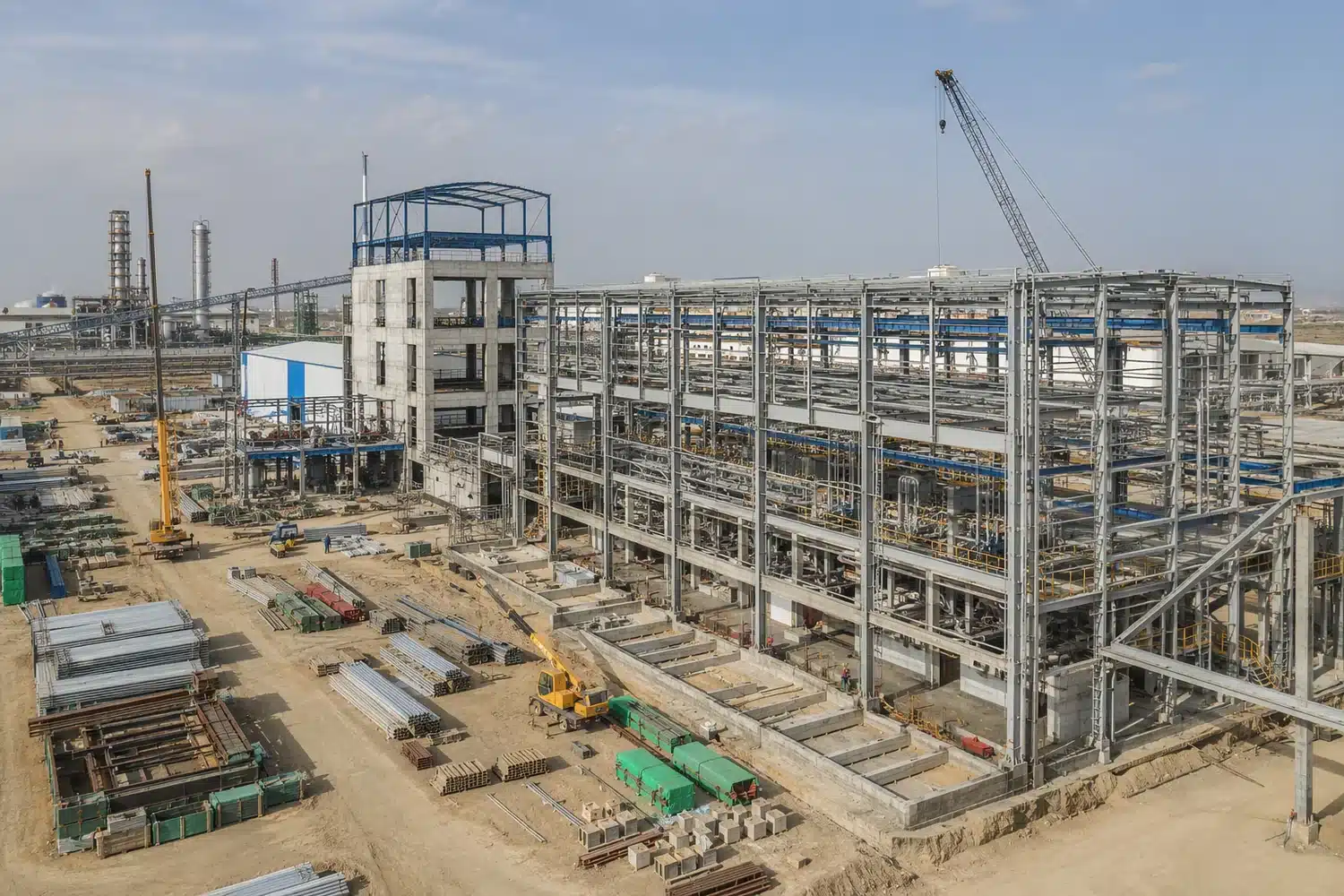
A Zhonghengfeng Group article published on October 12, 2021 presented an industrial project located in the Aluminum Industrial Park of Donghe District, Baotou, Inner Mongolia. The source names the development as a project planned for annual production of 300,000 rare-earth aluminum-alloy commercial vehicle wheels and 50,000 metric tons of aluminum-based rare-earth functional intermediate alloy.
Those figures describe the project’s planned annual capacity. They are not evidence that the facility had reached production, passed performance tests, or achieved either output level when the article appeared. The source also does not identify Zhonghengfeng Group’s formal contract role or define a package of work. It only reports the company’s involvement in broad promotional terms, with references to construction quality, technical difficulties, and attention to detail.
Confirmed information and reporting limits
| Topic | What the source states | How it is treated here |
|---|---|---|
| الموقع | Aluminum Industrial Park, Donghe District, Baotou, Inner Mongolia | Reported as the project location |
| Wheel capacity | Annual production of 300,000 rare-earth aluminum-alloy commercial vehicle wheels | Reported only as planned project capacity |
| Alloy capacity | Annual production of 50,000 metric tons of aluminum-based rare-earth functional intermediate alloy | Reported only as planned project capacity |
| Company role | Zhonghengfeng Group is associated with the project and its construction in the source | Described as source-reported involvement; no package is inferred |
| Status | The article discusses project construction and contains a video placeholder | No commissioning, completion, or achieved-output claim is made |
This distinction is important for technical and commercial readers. A project name can describe a future design basis, while actual output depends on completion, commissioning, process qualification, operating conditions, supply chains, and many other factors not covered in the source.
Why planned capacity must remain clearly labeled
Capacity language is often used to define the intended scale of an industrial investment. It may support land planning, utility studies, equipment selection, storage design, logistics analysis, or regulatory submissions. It does not automatically describe current operating performance. Even after construction, nameplate or planned capacity is different from production achieved over a specific reporting period.
For this reason, the figures in the project title should remain attached to words such as “planned” or “designed,” unless later primary documentation confirms commissioning and output. The October 2021 article does not publish a commissioning certificate, acceptance record, production report, or operating data. This draft therefore avoids phrases such as “produces 300,000 wheels per year” or “has achieved 50,000 tons annually.”
Industrial project interfaces behind the headline
A facility combining wheel production with intermediate-alloy output can involve multiple technical systems and contract packages. Depending on the final design, project teams may need to coordinate process equipment, building structures, foundations, utilities, material handling, ventilation, electrical distribution, fire protection, environmental controls, roads, and logistics. This list describes common industrial-project interfaces and is not a statement that Zhonghengfeng performed any of those packages.
At each interface, teams need an agreed design basis and responsibility boundary. Equipment loads must match structural inputs. Openings and embedded items must be coordinated with civil and building works. Utility demand must be connected to equipment data. Installation clearances, maintenance access, and lifting routes must be reviewed before procurement decisions make changes expensive.
- Maintain a responsibility matrix that identifies the owner of each technical input.
- Control drawing and equipment-data revisions through an agreed document process.
- Record interface assumptions and convert them into confirmed inputs before release.
- Link procurement dates to approved data rather than headline schedule targets alone.
- Plan inspection, access, lifting, and handover needs early enough to influence design.
The source’s general references to quality and technical challenges are consistent with the need for such coordination, but it provides no details from which specific methods, tests, or solutions can be verified.
Engineering value: controlling unknowns
For engineering teams, the most useful lesson is the need to separate known requirements from open assumptions. A planned-capacity statement may establish scale, but it does not provide equipment loads, bay dimensions, crane requirements, temperature criteria, corrosion conditions, process hazards, or tolerances. Those inputs must come from approved project documents.
When a supplier or contractor’s package is not publicly defined, technical discussions should begin with a scope matrix. The matrix can identify design responsibility, supply limits, exclusions, battery limits, temporary works, testing, documentation, and site services. That approach prevents a broad project association from being mistaken for responsibility for the entire facility.
Procurement value: define the package before comparing bids
For procurement teams, clear scope is essential to comparable quotations. Bidders should receive the same drawings, specifications, quantities, delivery terms, inspection requirements, and commercial assumptions. Any missing information should be listed as a clarification rather than silently priced on different bases.
Capacity figures alone are not enough to buy engineered work. Purchasers may also need to define applicable standards, material grades, coating or surface requirements, tolerances, quality documentation, shop inspection points, packing, transport, unloading, installation support, and acceptance criteria. Bid evaluations should distinguish compliance, exclusions, alternatives, and schedule dependencies.
The 2021 source is therefore best used as a historical project record, not as a substitute for a case study with a verified contract scope. Customers seeking evidence of relevant capability should request package-specific references and documents that can be reviewed against their actual needs.
Request a scope-based project review
If you are planning an industrial facility or an engineered steel package, send the available project description, drawings, specifications, responsibility boundaries, planned schedule, and required deliverables. We can review the information and discuss whether the requested work aligns with our capabilities and documentation process. تواصل معنا to arrange a scope-based discussion.