
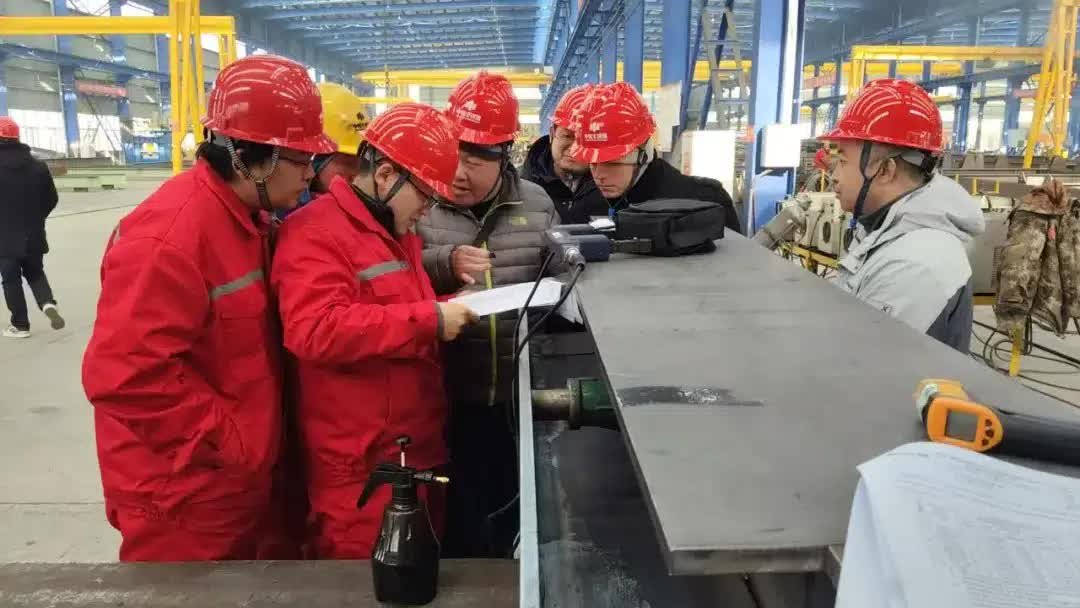
Personnel examining paperwork beside a steel component on the workshop floor.
After a steel supply contract is signed, an informal promise to “check the drawings again” leaves production planning, cutting and later changes open to disagreement. Zhonghengfeng’s October 1, 2026 guidance sets out four rules that can make shop-drawing approval and change control traceable.
Name the people authorized to approve drawings
Identify who on the buyer, designer or main-contractor side can approve the component drawings, connection details and material schedules. Record approval through signatures or traceable email or platform records. A verbal agreement or an untraceable chat exchange should not be treated as a dependable production instruction.
Define the frozen revision
State the drawing revision number and date that authorize production planning and cutting. Revisions can be discussed before that information is frozen; changes afterwards should follow the agreed change window rather than being inserted into production orally.
Describe the change window and the required technical information
Agree when a change may be submitted and what it must contain. A useful submission identifies the affected members or connections and the production batches involved. Written confirmation should precede cutting or fabrication of the affected batch.
The source does not set prices, a fixed number of days or a promise of free revisions. Cost and schedule effects must be agreed separately from the technical change procedure.
Decide what happens when a change arrives late
For batches already cut, fabricated or coated, agree the default response to a change outside the window. Depending on the contract, this may involve pausing the affected batch or waiting for written confirmation before revising the drawings and cutting replacement material.
The purpose is to avoid fabricating to an old revision while the receiving team expects a new one. The response should remain limited to the affected work and the authority defined by the agreement.
Separate drawing control from site installation obligations
If site erection, final tightening of high-strength bolts or field-weld inspection belongs to another contractor, define the related change responsibilities separately. They should not be treated automatically as obligations of the manufacturing supplier.
This guidance develops the drawing-approval part of the delivery-milestone schedule. It does not replace the manufacturing ITP, the quality-dossier index or evidence of project experience.
This guidance concerns the steel fabrication and supply interface. The contract and technical agreement determine the actual responsibilities; it does not offer EPC general contracting or assume responsibility for site installation.
Zhonghengfeng Construction Group Co., Ltd. identifies its manufacturing and processing base as Baotou, Inner Mongolia, China. The company can discuss the relevant fabrication and supply interfaces with buyers, with the scope of any preliminary technical discussion agreed separately.
Archive source: Zhonghengfeng’s original Chinese company article, published 1 October 2026.