
Production Execution and Team Coordination in Steel Manufacturing
A Zhonghengfeng Group article published in January 2021 discussed execution in the context of production and teamwork. The historical item is best read as an internal management reflection rather than as verified proof of productivity. This English version therefore focuses on the operating disciplines implied by the theme—clear instructions, coordinated roles, controlled handovers, and timely issue resolution—without repeating the source title’s conclusion that execution is “efficient productivity.”
No production quantity, cycle-time reduction, delivery rate, quality result, or other performance indicator is asserted here. The source material available for this draft does not provide independently verifiable metrics. The engineering and procurement observations below explain what sound execution can look like and what evidence a client may request when evaluating a manufacturing package.
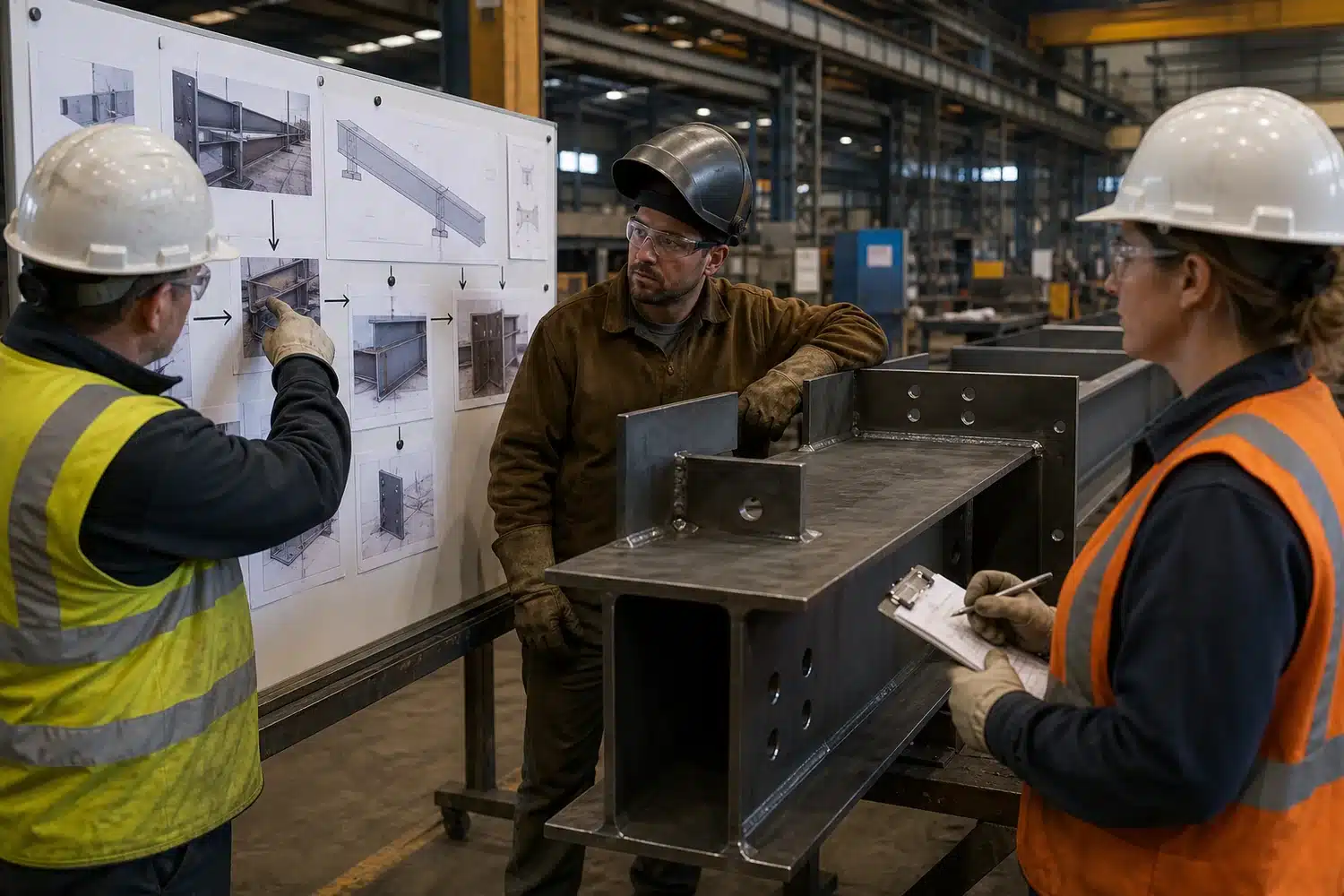
Execution Begins With a Usable Work Package
A workshop team cannot execute reliably if the input is incomplete or ambiguous. Before work is released, the package should identify the governing drawing or model, revision, material specification, quantity, process requirements, acceptance criteria, and required completion sequence. If information is provisional, the limits should be explicit.
This point is important for both managers and buyers. Informal urgency can move work forward temporarily, but undocumented changes create risk at later stages. A controlled release tells operators what to make, quality personnel what to inspect, procurement personnel what to source, and logistics teams when and how the item is expected to move.
| Execution interface | Minimum question | Useful control record |
|---|---|---|
| Engineering to production | Is the information approved and current? | Drawing/model register and release notice |
| Procurement to workshop | Are the correct materials and consumables available? | Material list, receiving record, and traceability status |
| Production to quality | Which checks occur before work proceeds? | Inspection and test plan, check sheet, hold-point release |
| Process to process | What is complete and what remains open? | Traveler, handover record, or status board |
| Workshop to logistics | Is the item released, identified, and packable? | Release note, packing list, and dispatch plan |
Team Coordination Across Production Stages
Steel fabrication is a chain of related activities. Depending on scope, work may include material receiving, marking, cutting, drilling, forming, assembly, welding, dimensional inspection, nondestructive examination, surface preparation, coating, packing, and dispatch. The output of one stage becomes the input to another, so local progress does not necessarily mean the whole package is ready.
Team coordination makes these dependencies visible. Supervisors need to know which components have approved information and materials, which require inspection, which are waiting for a decision, and which must be prioritized to support assembly or site need dates. Operators and inspectors need a clear path to raise discrepancies without allowing an assumption to become an unrecorded change.
- Assign responsibility for each task and each required decision.
- Sequence work according to downstream assembly, inspection, packing, and delivery needs.
- Separate blocked work from released work and record the blocking reason.
- Communicate drawing revisions to every affected station and retrieve obsolete information.
- Confirm handover status rather than relying on verbal completion messages alone.
Managing Deviations Without Hiding Them
Execution does not mean continuing regardless of uncertainty. A controlled team stops or isolates work when material identity, dimensions, drawing status, process qualification, or acceptance requirements are unclear. The issue can then be documented, reviewed by the appropriate authority, and closed through an approved disposition.
This behavior protects the project because it preserves traceability and prevents a local workaround from affecting fit-up, coating, transport, or erection. Procurement contracts should state how technical queries, substitutions, concessions, and nonconformances are submitted and approved. They should also identify which decisions remain with the designer, client, main contractor, or supplier.
Daily Planning and Shift Handover
Short-interval planning can translate the overall production schedule into practical daily priorities. A useful plan aligns available drawings, materials, people, equipment, tooling, inspection capacity, and space. It also identifies activities that must finish together, such as matched components or assemblies that share a delivery sequence.
Shift handovers are equally important where work continues across teams or time periods. The outgoing team should communicate completed operations, inspections performed, outstanding checks, equipment condition, temporary restraints, open technical questions, and the next safe and authorized step. A concise written or digital record can reduce dependence on memory.
How Procurement Teams Can Assess Execution
Buyers should avoid equating a management slogan with capability. Instead, they can review how the proposed supplier converts contract information into shop activity and how status is evidenced. The depth of assessment should reflect package complexity, criticality, and project risk.
- Review document control. Ask how released and superseded drawings are identified at points of use.
- Review material control. Check receiving, identification, storage, issue, substitution, and traceability arrangements.
- Review process control. Confirm applicable procedures, personnel qualifications, equipment status, and inspection stages.
- Review status reporting. Define what “started,” “fabricated,” “inspected,” “coated,” “released,” and “shipped” mean.
- Review change management. Identify approval routes and the records required before altered work proceeds.
- Review interfaces. Align fabrication with transport restrictions, erection sequence, site access, and handover documentation.
The purpose is not to demand paperwork for its own sake. It is to connect production decisions with evidence that both parties can understand.
Engineering Value: Design Information That Can Be Executed
Engineering teams contribute to execution by issuing coordinated, constructible information. Details should account for fabrication access, welding or bolting sequence, tolerances, coating, lifting, transport, and site assembly as applicable. When design changes, affected components and documents should be identified so that production can respond in a controlled manner.
Early dialogue between engineering, production, quality, procurement, and logistics can expose constraints before materials are cut. That dialogue does not guarantee a performance outcome, but it gives the team a structured basis for decisions and reduces reliance on informal interpretation.
A Measured View of Team Execution
The January 2021 source highlighted production execution and cooperation. A careful company-news account can retain that useful theme without claiming that teamwork automatically produces superior efficiency or that any unreported target was achieved. Execution is better demonstrated through current plans, records, inspection evidence, and transparent status definitions.
For a project-specific discussion, send the scope, drawings or model status, material requirements, inspection expectations, delivery sequence, and documentation needs through our contact page. These inputs allow the production and engineering interfaces to be reviewed against the actual enquiry.