
Export packaging for structural steel is the last manufacturing control before a component leaves the factory. During inland transport, port handling, ocean carriage and site unloading, the steel may face condensation, salt exposure, impact, unstable support, repeated lifting and loss of small parts.
For overseas owners, EPC contractors and steel buyers, a general instruction to “pack for export” is not sufficient. The packing specification should reflect component geometry, coating condition, route, duration, transport unit, lifting method, storage exposure and erection sequence.
Treat packaging as an engineered delivery process
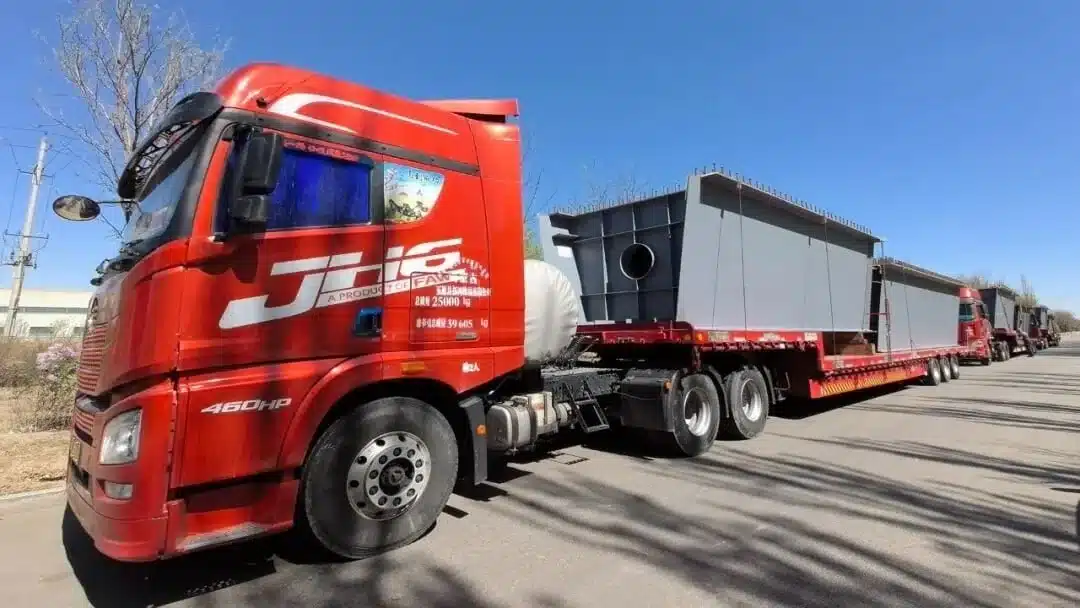
A useful packaging plan begins with transport and handling information, not a list of consumables. The planner should understand whether the cargo will travel in a closed container, open-top container, flat rack, truck, rail wagon or breakbulk vessel; how many transfers are expected; where it may be stored; and which lifting equipment will be available.
| Risk | Required input | Typical control |
|---|---|---|
| Condensation and corrosion | Route, climate, duration, coating condition and enclosure | Dry packing, ventilation or barrier system, desiccant/VCI design and monitoring |
| Distortion | Geometry, weight, stiffness and support points | Calculated dunnage, frames, aligned supports and lifting plan |
| Impact and abrasion | Handling stages, exposed edges and coating sensitivity | Separators, edge protection, restraints and no-metal-contact details |
| Missing parts | Erection sequence and connection package | Zone-based kits, sealed containers, labels and reconciliation |
| Customs or quarantine delay | Destination requirements and packaging materials | Approved marks, treatment records and accurate packing documents |
Control moisture before closing the package
Steel should be clean, dry and sufficiently cured before it is enclosed. Packaging a wet component or uncured coating can trap moisture and solvent. A vapour barrier or VCI material cannot correct poor surface condition.
The moisture-control design may combine:
- a suitable coating or temporary protection system;
- barrier wrapping or VCI material where appropriate;
- desiccant sized for the enclosure, route and expected duration;
- sealed joints and protected openings;
- humidity indicators or data loggers for critical cargo;
- inspection after loading and before final closure.
There is no universal quantity of desiccant suitable for every container. Cargo moisture, timber moisture, air volume, barrier permeability, climate and voyage duration all affect the calculation. Supplier marketing claims should be validated against the actual route and packaging system.
Protect vulnerable coating areas
Edges, bolt holes, welds, lifting points and contact surfaces are more vulnerable than broad flat areas. Separators and pads should prevent steel-to-steel abrasion without creating an unstable support. Wrapping should not conceal lifting points or identification marks needed during handling.
Where the coating system requires site touch-up, the shipment should include approved repair instructions and clearly identify intentionally uncoated or masked areas. Damage recorded before dispatch should not be confused with transit damage.
Support the component in the correct locations
A structural member designed for its final support condition can be damaged when transported on different supports. Long, slender or thin-walled components may distort under self-weight, concentrated dunnage loads or excessive restraint.
The transport engineer or competent planner should define support, lifting and securing points using component weight, centre of gravity, stiffness and transport accelerations. Supports should align vertically through stacked layers where required and bear near stiffened or otherwise suitable locations. Blocking should not transfer load into thin plates or projecting details.
Before dispatch, critical components can be dimensionally checked. An agreed receiving inspection then helps distinguish fabrication deviation from transport damage.
Secure cargo without damaging it
The IMO/ILO/UNECE Code of Practice for Packing of Cargo Transport Units provides international guidance for safe packing and securing. The applicable carrier, port and national requirements must also be followed.
Restraint design should consider cargo mass, friction, transport mode, lashing capacity, direction of forces and blocking. Too little restraint permits movement and impact; excessive tension can damage thin-walled members, coatings or edges. Container walls and doors should not be assumed to be structural supports beyond their rated capability.
A packing drawing should show:
- cargo orientation and centre-of-gravity information;
- dunnage and support locations;
- blocking, bracing and lashing points;
- rated securing equipment;
- lifting points and sling restrictions;
- gross and package weights;
- loading and unloading sequence.
Manage wood packaging under ISPM 15
Solid wood packaging used in international trade may be subject to ISPM 15 phytosanitary requirements. Covered wood packaging must be treated by an approved method and marked by an authorized provider. Heat treatment conventionally requires the wood core to reach at least 56°C for a continuous 30 minutes, but the current standard and destination-country rules govern.
The mark identifies the country, approved provider and treatment method. It is not evidence that the timber is dry enough for corrosion-sensitive cargo. Moisture content should be specified separately when wet timber could increase condensation risk.
Processed wood products may be outside ISPM 15 scope, but the project should confirm the actual material and destination requirements. Dunnage and blocking placed inside the transport unit can also be regulated wood packaging material.
Kit small parts by erection area
Bolts, nuts, washers, connection plates, shims, anchors and temporary erection items can stop a workfront if they are missing. Small parts should be sealed, labelled and grouped by erection zone or assembly, with quantities independently checked before closure.
The label, packing list and digital shipment record should use the same package and component identifiers. Each package should be traceable to the bill of lading or transport document and, where useful, to the erection sequence.
Use clear labels and durable records
Labels must remain legible through expected weather and handling. Depending on the project, they may include project, package, component range, gross/net weight, dimensions, centre of gravity, lifting marks, storage orientation and destination zone.
Photographic records should capture component condition, protection details, support and restraint, labels, small-part kits and final closure. For critical shipments, retain:
- approved packing drawing and method statement;
- pre-packing coating and dimensional inspection;
- wood-treatment and supplier records where applicable;
- packing list and weight verification;
- loading, lashing and seal photographs;
- container or vehicle number and seal number;
- environmental logger data and receiving report.
Coordinate packaging during detailing
Transport limits, component segmentation, lifting points and support locations should be considered during detailing. Waiting until fabrication is complete can force inefficient packing or unplanned modifications. Early coordination also allows shipping lots to follow site priorities.
The buyer should identify any storage period after arrival. Packaging suitable for a closed voyage may not be suitable for months of outdoor site storage. Responsibility for opening, inspection, resealing and preservation should be assigned.
A buyer’s export packing checklist
| الفحص | Evidence |
|---|---|
| Component is ready to pack | Final release, dry/cured coating and condition report |
| Package can carry the load | Drawing, weights, supports and securing calculation or approved method |
| Moisture risk is controlled | Barrier/VCI/desiccant design and environmental record |
| Wood is compliant | ISPM 15 mark and treatment/provider evidence where required |
| Parts can be identified | Durable labels, packing list and erection-zone references |
| Condition can be proven | Dated photographs, seal details and receiving inspection |
Packaging protects the delivered value
Good export packaging does not merely make steel look tidy at dispatch. It preserves coating, geometry, completeness and traceability until the buyer can inspect and install the components.
Zhonghengfeng supports structural steel fabrication, packing planning and export-delivery coordination. To review the packaging interface for your project, تواصل معنا with the component list, transport route, destination, handling method and site storage plan.